
Choosing a preschool is one of the first big decisions you make as a parent, and it can feel surprisingly overwhelming. Every school says it is caring, qualified, and child-centred. So how do you know which one is truly right for your child?
The good news is that you do not need to be an education expert. You need to know what to look for, what to ask, and what to notice when you visit a school. Here is a guide to help you through the process, including how we approach each of these areas at LILLIPODS, where we believe that the best learning begins with joy.
Start with Your Child, Then Your Family Priorities
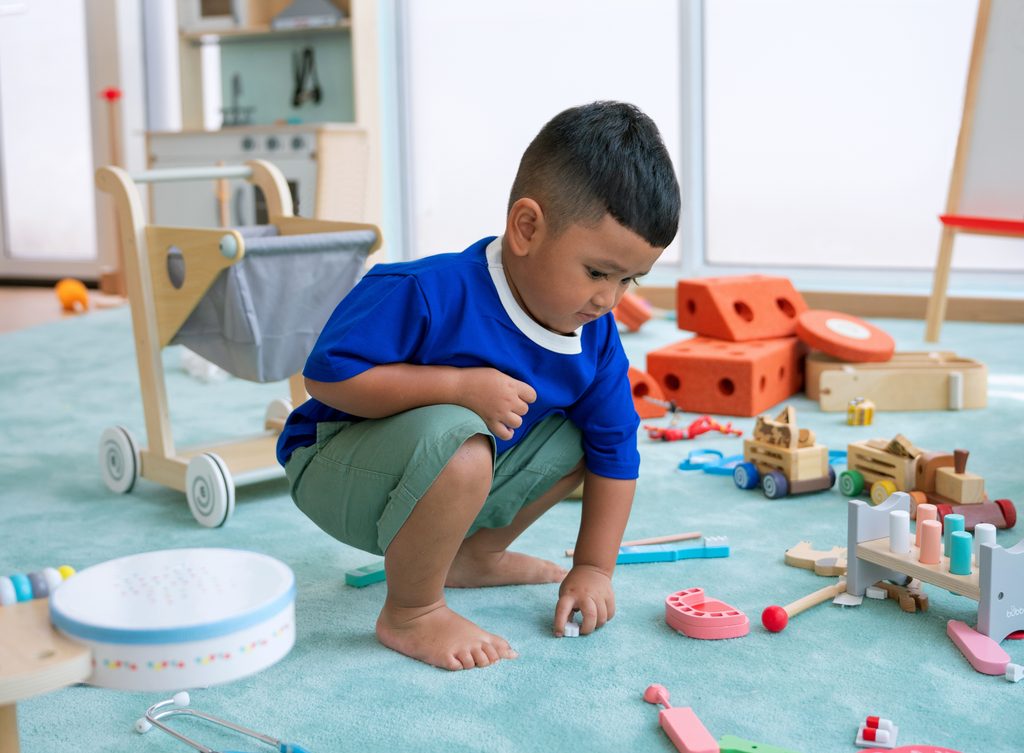
Before looking at a single preschool, start by looking at your child. What are they like in new environments? Are they cautious at first, or eager to explore? Do they take time to warm up to new adults? Do they need lots of movement throughout the day, or are they happy settling into quieter activities? There is no right answer. Every child is different, and a good preschool should be able to meet your child where they are.
Then think about what your family needs. Making a short list of priorities before visiting schools can help you focus on what matters most. Consider these factors:
- Location and commute. A preschool that is convenient for your family can make mornings calmer and more manageable for everyone.
- Schedule. Do you need a few mornings a week, a full preschool programme, or a longer day?
- Budget. Ask for the complete picture of fees, including registration, uniforms, meals, and additional activities.
- Your child’s age and readiness. Young children may need time to adjust to being away from their caregivers. Consider whether the school offers a gradual or flexible start.
- Your child’s individual needs. If your child needs additional support with communication, development, behaviour, or other areas, ask the school how they can support them before making a decision.
The goal is not to find the perfect school on paper. It is to find a school that works for your child and your family.
Understand the Different Preschool Approaches
Preschools can have very different approaches to how they teach, support, and guide children. Each approach reflects different ideas about how young children learn and develop, so it is important to understand what each school values and how that translates into everyday learning. These are the approaches you will hear about most often:
- Montessori: Child-led, hands-on learning using specially designed materials, often with an emphasis on independence.
- Reggio Emilia: Project-based learning that follows children’s interests, with a strong focus on creativity, expression, and exploration.
- Waldorf: An imagination-led approach with an emphasis on creative experiences, nature, and play.
- Academic-focused: More formal instruction in areas such as letters and numbers, often with a stronger emphasis on early academic preparation.
- Play-based: Children learn through guided play, exploration, and hands-on experiences, with teachers intentionally designing environments and activities to support learning.
The best approach is one that aligns with your family’s values, beliefs about how children learn, and the kind of environment you want to create for your child. Think about what you value most in your child’s early years.
Many preschools combine elements of different approaches, so don’t be afraid to look beyond the label. Instead of simply asking, “What educational philosophy do you use?” try asking, “What does a typical morning look like for my child?” The American Academy of Pediatrics notes that playful learning, where children take the lead and follow their own curiosity, should be the main focus of high-quality early childhood education.
At LILLIPODS, play is at the heart of our approach. Our curriculum is adapted from the Finnish National Curriculum for Early Childhood Education and Care and localised for the Indonesian context. Finland’s national early childhood curriculum states that the best interest of the child is always the primary consideration, and recognises that play motivates children and brings joy while helping them learn new skills.
Look at the Curriculum and the Daily Routine
Ask the school to walk you through a typical day.
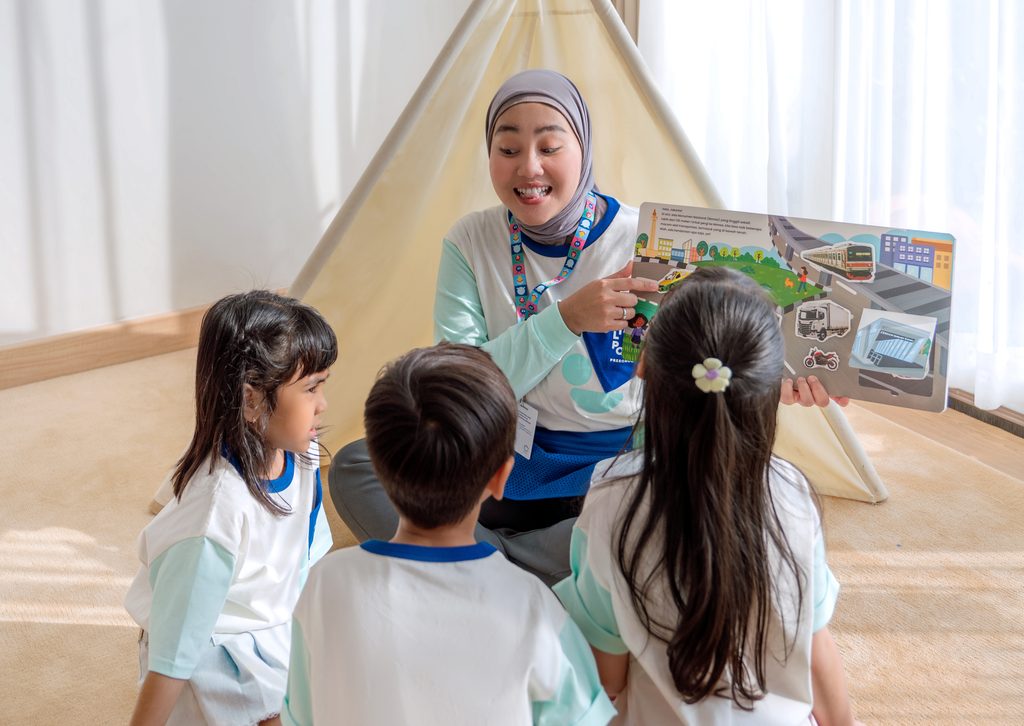
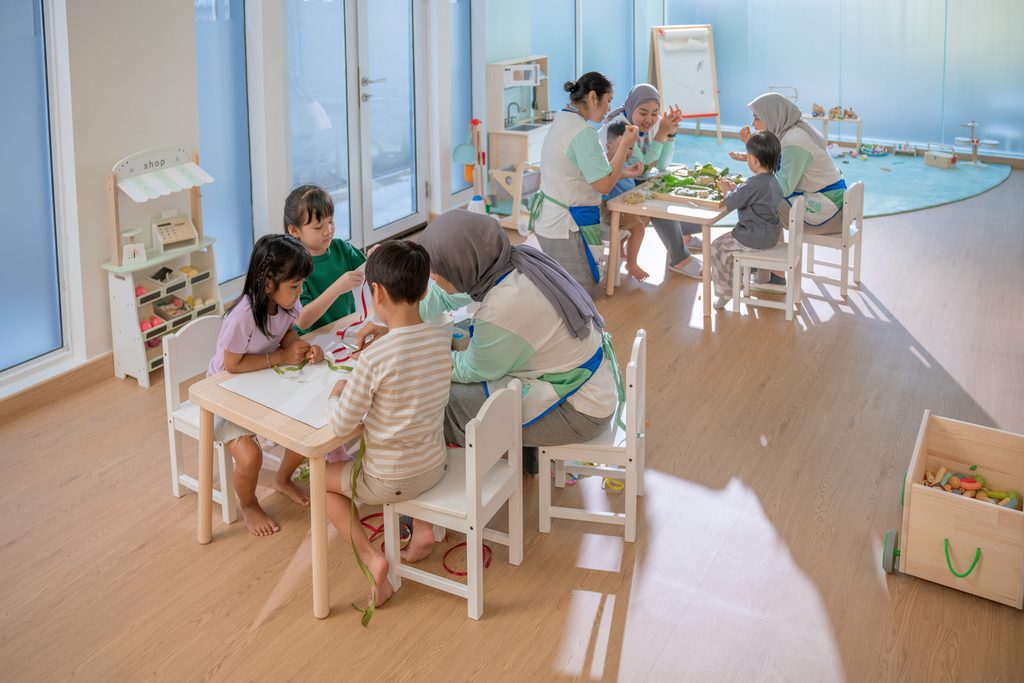
A well-balanced preschool day should include opportunities for play, stories, creative activities, movement, social interaction, meals, and rest. Children need a variety of experiences rather than spending most of their day in one type of activity. Child Care Aware‘s preschool program checklist suggests asking whether children spend a significant part of the day playing, whether they can choose their own play partners, and how the teachers interact or play with children to help them learn.
Look beyond the daily schedule and ask how the school decides what children should learn. A strong curriculum does not necessarily mean worksheets or formal lessons. It means teachers have clear learning goals and intentionally create experiences that help children develop skills in areas such as language, early numeracy, science, social-emotional development, creativity, and physical development.
At LILLIPODS, these areas are integrated into playful and meaningful experiences, allowing children to develop foundational skills while still having the freedom to explore and enjoy the process of learning.
You can also ask how the school uses screens and technology, if at all, and how much of the day children spend in active, hands-on experiences.
Get to Know the Teachers and the Classroom
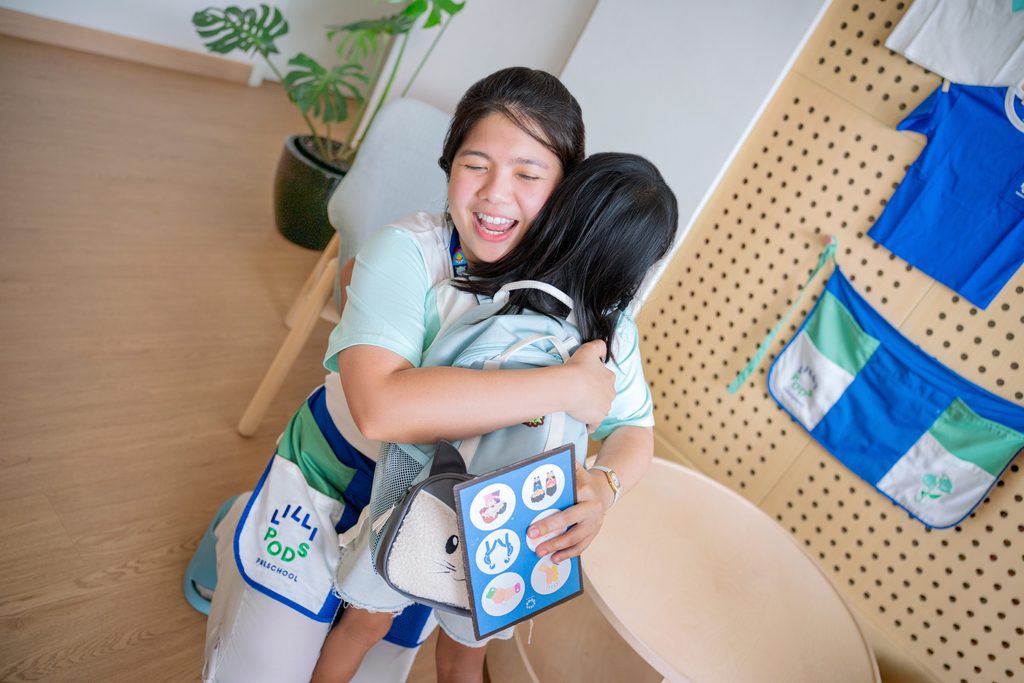
Teachers shape your child’s day more than any building or brochure. It is also useful to ask about the teachers qualifications, experience, and ongoing professional development. Then watch how the teachers interact with the children. This tells you more than any certificate. Here are some questions to ask or observe:
- Do teachers get down to children’s eye level when speaking to them?
- Are children greeted warmly when they arrive?
- How do teachers respond when a child is upset?
- Do teachers show genuine interest in what children say and create?
- When children disagree, do teachers help them work through the situation?
Class size and teacher-to-child ratios are also worth asking about. Smaller groups can give teachers more opportunities to understand each child’s interests, needs, and development. The American Academy of Pediatrics recommends a maximum ratio of 7 children per adult for three-year-olds and 8 children per adult for four- and five-year-olds. At LILLIPODS, our class sizes are kept within these recommended group-size guidelines, allowing teachers to give children the attention and support they need.
Look at the Learning Environment
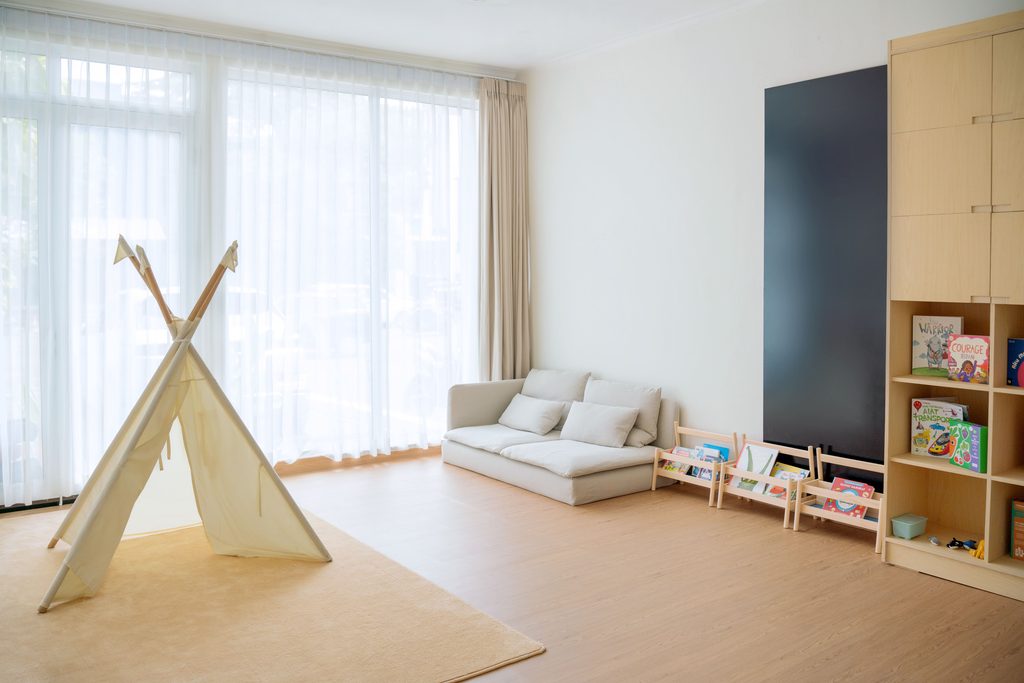
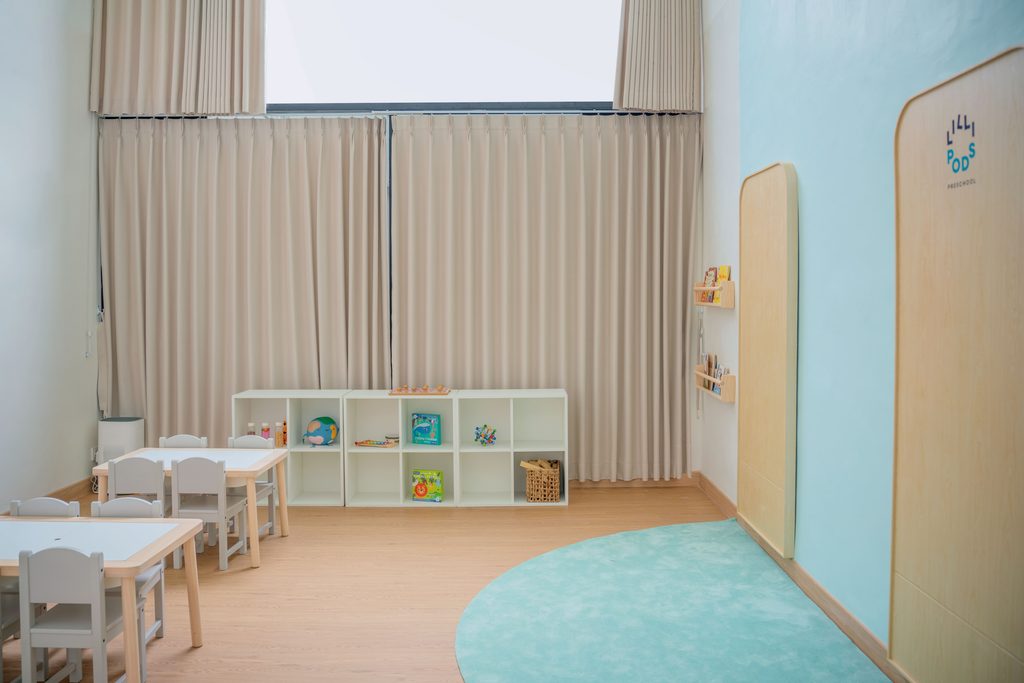
You don’t need a huge or luxurious building for children to have a great preschool experience. What matters is whether the environment is safe, welcoming, and designed for children. When you visit, look at how the space is organised. Look for room to move, a quiet corner for resting, and classrooms designed around children’s learning. Research suggests that calm, less cluttered environments can make it easier for young children to focus and engage with their activities than spaces that are overly decorated. Outdoor space is important as well. Ask about the school’s outdoor space and, more importantly, how outdoor experiences are incorporated into the learning programme. Children need regular opportunities to move their bodies, play, explore nature, and develop physical skills.
See How the School Works with Parents
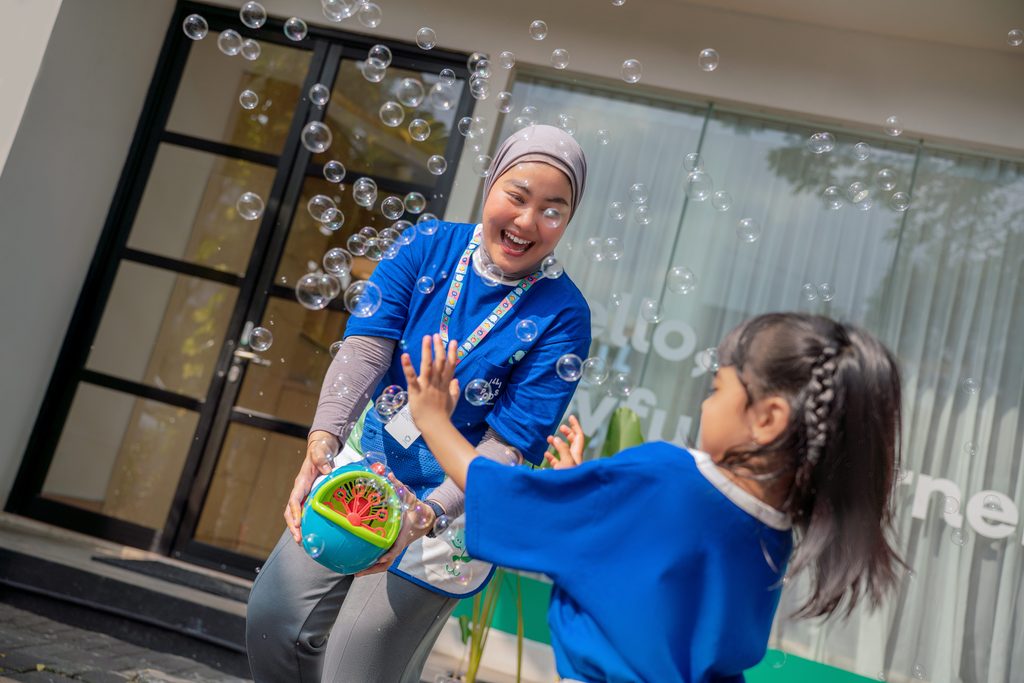
Starting preschool is a partnership between the family and the school. Before enrolling, ask how teachers communicate with parents about their child’s day and development. Will you receive regular updates? How can you ask questions or raise concerns? How does the school share your child’s progress?
Pay attention to how the school communicates with you throughout the enrolment process. The way a school communicates with parents before enrolment can be a reflection of the communication and relationship you can expect after your child joins. A school that is responsive, clear, and welcoming from the beginning is more likely to build an open and supportive partnership with families over time.
At LILLIPODS, we schedule a Parent Initial Meeting (PIM) with both parents and the child before they start school. This gives us an opportunity to get to know the child and family, understand their individual needs and expectations, and discuss their goals and vision for the child’s learning and development at LILLIPODS. Starting with this shared understanding helps us build a strong partnership between the family and the school from the very beginning.
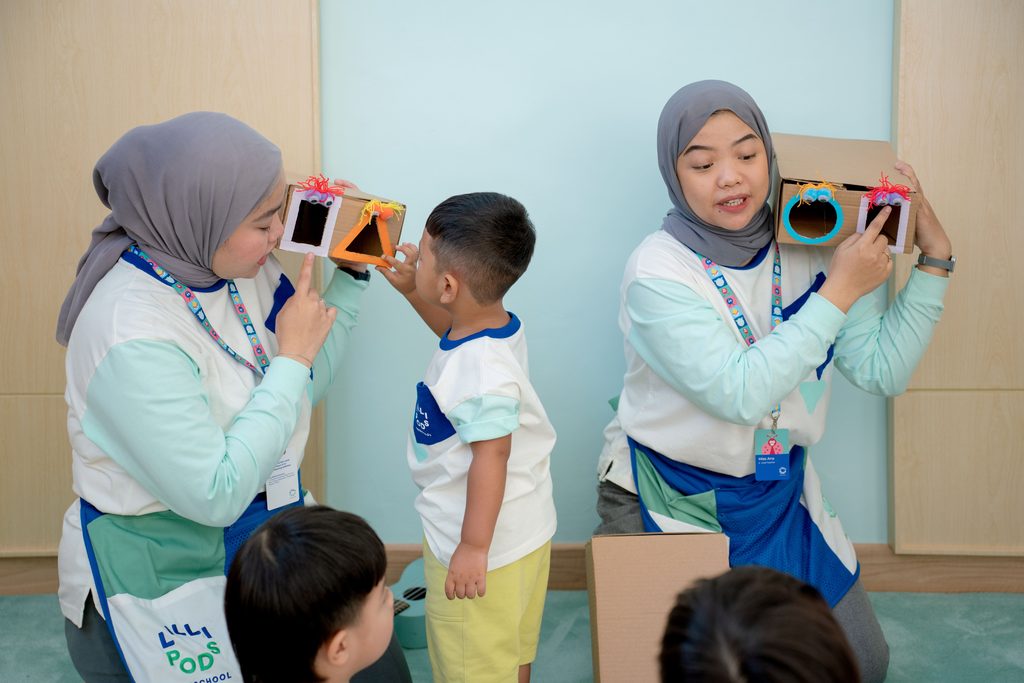
How Does LILLIPODS Approach All of This?
At LILLIPODS, we believe that joy is the foundation of lifelong learning.
As part of the HEI Schools family, we draw on the experience of more than 10 years of bringing Finnish-inspired early childhood education to families while adapting the approach to the needs and context of Indonesia.
Our curriculum is adapted from the Finnish National Curriculum for Early Childhood Education and Care and localised for Indonesian children and families. Learning happens through play, exploration, meaningful interactions, and carefully designed experiences that support each child’s development.
Our preschool programmes are designed to grow with children from around 12 months to 6 years old, with age-appropriate experiences that support their development at every stage. For families looking for additional experiences, LILLIPODS also offers clubs and enrichment programmes, giving children opportunities to explore interests such as sports, music, art, and other areas beyond the preschool day.
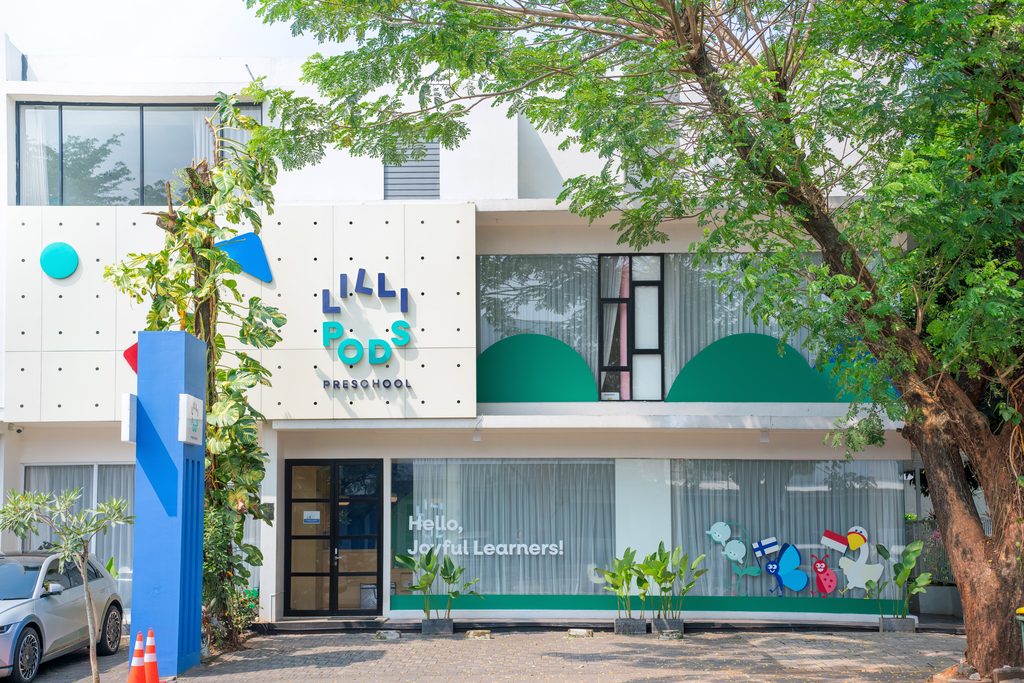
You can visit LILLIPODS at The Icon BSD or Baloi Batam, and we welcome families to get in touch and arrange a free trial class. It is an opportunity for you to ask questions, explore the environment, and most importantly, see how your child feels in the space before making your decision.
Conclusion
Choosing a preschool is ultimately about finding the right environment for your child and your family. Look beyond the brochure. Pay attention to how teachers interact with children, how learning happens throughout the day, how the environment makes your child feel, and how the school communicates with parents.
Start with your child’s needs and your family’s priorities. Visit the schools you are considering, ask questions, and give yourself time to make the decision. The right preschool is one where your child can feel safe, supported, curious, and excited to learn, and where you feel confident that you are part of the journey.
At LILLIPODS, we believe every child and family has their own unique needs. We take the time to understand what matters to your family, work together with you as your partner, and support you throughout your child’s learning journey.